Showing posts with label EON. Show all posts

Monday, 28 November 2011

E.ON UK ORDERS ADDITIONAL 105 CERAMIC FUEL CELLS' PRODUCTS 28 November 2011

RNS Number : 8480S

Ceramic Fuel Cells Limited

28 November 2011

Ceramic Fuel Cells Limited [AIM/ASX: CFU], a leading developer of high efficiency and low emission electricity generators for homes and other buildings, is pleased to announce that it has received a new 105 unit order from E.ON UK, one of the UK's leading power and gas companies.

E.ON has also reaffirmed that they are committed to working with CFCL to launch integrated power and heating products for the UK market.

New agreements have been signed with E.ON covering both Ceramic Fuel Cells' BlueGen modular generator and the micro combined heat and power unit in development. Each product uses CFCL's Gennex fuel cell module as its core technology.

   BlueGen          (power + hot water) 

E.ON has ordered 41 BlueGen electricity generators to be deployed under the European Union Fuel Cell and Hydrogen Joint Undertaking's Joint Technology Initiative ("JTI") fuel cell demonstration programme. The JTI project partners are E.ON, CFCL, Ideal Boilers Limited and HOMA Software BV of The Netherlands. Under the JTI project, the BlueGen units will be installed in homes and other buildings in the UK, Germany and The Netherlands, during early 2012.

Ideal Boilers is an established UK heating company that has produced boilers for over 100 years. HOMA Software is a software house specialising in remote monitoring and control of micro combined heat and power systems.

An additional four BlueGen units will be deployed by E.ON in demonstration and commercial customer sites.

BlueGen is the first and only fuel cell product to receive Microgeneration Certification Scheme (MCS) certification and be eligible for the UK feed in tariff, which provides 10.5 pence per kilowatt hour of electricity generated, plus an additional 3.1 pence per kilowatt hour of electricity exported to the grid. BlueGen customers are also eligible to receive a feed in tariff in Germany and The Netherlands.

BlueGen uses ceramic fuel cells to turn natural gas into electricity and heat for hot water, with each unit capable of producing more than three times the electricity needed to power the average UK home.(1) Surplus electricity can be sold back to the grid.

________________________________

(1) Source: Medium UK household power consumption is 3,300 kWh/year per Ofgem Factsheet 96 18.01.11

   Integrated micro combined heat and power   (power + hot water + home heating) 

CFCL and Ideal are also developing products which provide power, hot water and home heating. CFCL and Ideal have built two prototype units for testing during the 2011/12 heating season.

This completes the development work under the Product Development Agreement signed with E.ON in 2009.

CFCL and E.ON are continuing to work together to develop a range of product configurations for different UK market segments and customer requirements. Once the Product Development Agreement is completed during 2012 the next stage in the parties' collaboration is to negotiate and sign a Product Supply Agreement for commercial products. This is subject to the products performing as expected and to the parties agreeing on the material terms for a commercial product, such as product specification and warranties, pricing, firm order volumes and delivery schedule.

Under the JTI project, Ideal and CFCL will develop up to 60 integrated units, to be installed in homes in the United Kingdom, Benelux and Germany from late 2012. These integrated units will be manufactured by Ideal in the UK.

Unlike BlueGen, these integrated units provide home heating, and will be targeted at the market for replacement home boilers, which in the UK alone comprises 1.6 million(2) units per year.

________________________________

(2) Source: Heating & Hot Water Industry Council Market Updates 2010 - 2011

Brendan Dow, Managing Director of Ceramic Fuel Cells, said:

"Our close working relationship with E.ON continues to strengthen as evidenced by this new order and we continue to discuss new ways of broadening our collaboration together. Ceramic Fuel Cells is right at the forefront in the development of high efficiency fuel cell microgeneration and its integration into today's homes."

Dr Chris Horne from E.ON

"These agreements with Ideal Boilers, CFCL and HOMA Software reflect our ongoing relationship to develop fuel cell based products for the retrofit and new build markets. We are now pleased to commit funding and resources at this critical point in the technology's commercialisation. The additional help of the FCH-JTI funding to extend our field demonstrations into the EU, and optimise the component and supply chain is a significant step in delivering commercial products, building on CFCL's market-leading technology. This technology signals that cleaner, more cost-effective energy in the UK home is closer than ever before."

For further information please contact:

  Ceramic Fuel Cells  Andrew Neilson                   Tel: +61 419 950 771                                   Email: investor@cfcl.com.au    Nomura Code Securities (AIM      Tel: +44 (0) 207 776   Nomad)                           1200  Juliet Thompson, Chris Golden    Australia Media enquiries  Richard Allen, Oxygen Financial  Tel: +613 9915 6341   Public Relations    UK Media enquiries               Tel: +44 (0) 7786 116   Mark Way                         991                                    Email: Mark.W@harvardamerica.com  German Media enquiries           Tel: +49 (0) 69 9218                                    7454  Alex Seiler, Hering Schuppener   Email : aseiler@heringschuppener.com   Consulting     

Monday, 28 February 2011

Sheffield has big hopes to become the UK’s very first self-sufficient energy city

Apparently Sheffield has big hopes. In fact, the city is hoping to become the UK’s very first self-sufficient energy city, according to UK energy minister Chris Huhne. On top of all of this, this deal has already been given Huhne’s full support.

While the energy minister was visiting the city, he stopped by the University of Sheffield. It is here where they are working on world leading research in sustainable technology. Overall, the goal is to come up with technology that can help a city become fully sustainable.

His visit to this city follows an announcement made by the Sheffield City Council and energy company E.ON. They have announced that they are working hard to form a city-wide partnership that will help the city produce enough renewable energy to become self-sufficient. Overtime, the long-term goal would be for the city to produce enough energy that it could even sell some excess energy back into the national grid.

So this brings up the question, why is E.ON choosing to partner with Sheffield over other cities. Apparently E.ON has chosen Sheffield because of its international expertise on developing renewable energy technology, pretty much meaning that E.ON has faith that Sheffield has the willpower to make such a scheme work.

This is a big deal in the making. The overall goal of the government would be to see other cities make these kind of deals with other energy companies. Overtime, all cities could become self-sufficient and, thus, would be able to supply their own energy. Then all of the excess energy that the UK makes could be sold to other countries.

Monday, 21 February 2011

Feb 17 (Reuters) - Power Assets Holdings Ltd (0006.HK) is considering a 3.5 billion pound ($5.6 billion) bid for British power network assets of Germany's E.ON AG's (EONGn.DE) (EONG.AS), although no decision has been made, local newspapers reported on Thursday.

The company, part of the business empire of tycoon Li Ka-shing, changed its name from Hongkong Electric Holdings Ltd on Wednesday to reflect the growing importance of its overseas business, including a stake in Britain's second-largest power grid.

Managing director Tso Kai-sum said the company, controlled by Cheung Kong Infrastructure Holdings Ltd (CKI) (1038.HK), "was studying bidding documents", the South China Morning Post reported.

Tso declined to say whether it would team up with CKI to bid for the assets. Power Assets and CKI are both under Li's ports-to-telecoms conglomerate Hutchison Whampoa Ltd (0013.HK). They teamed up last year to buy EDF Energy. Plc's (EDF.PA) British network for 5.775 billion pounds.

Li was one of more than two bidders still in the race for the asset and E.ON was keen to complete the transaction in the first quarter, a source familiar with the deal told Reuters last month. [ID:nTOE70N024] (Reporting by Alison Leung; Editing by Chris Lewis)

Friday, 18 February 2011

Ceramic Fuel Cell Introduce The BlueGen Fuel Cell micro CHP unit

Currently Not Available In The UK until 2012


BlueGen is the latest breakthrough in small scale electricity generation - a modular style fuel cell generator that can be configured to suit a range of different markets and installations. For markets that require an alternative product approach to fully-integrated 'European style' systems, such as Japan, Northern America and Australia - BlueGen™ bridges that gap.


The future of electricity generation will be using a Distributed Generation network, where electricity can be generated and consumed at the point of use. Distributed Generation networks can address the concerns of; increasing electricity demand, limitations of traditional power generation, efficiency losses through transmission & distribution lines and significant infrastructure investment. There is a need today, and in the future, for secure and highly efficient generation of electricity with significantly lower greenhouse gas emissions. BlueGen™ is the latest in Solid Oxide Fuel Cell (SOFC) technology to deliver highly efficient electricity.

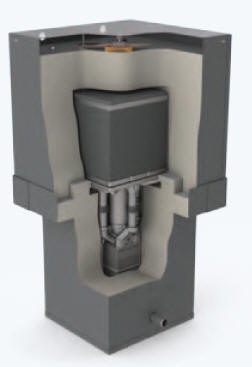
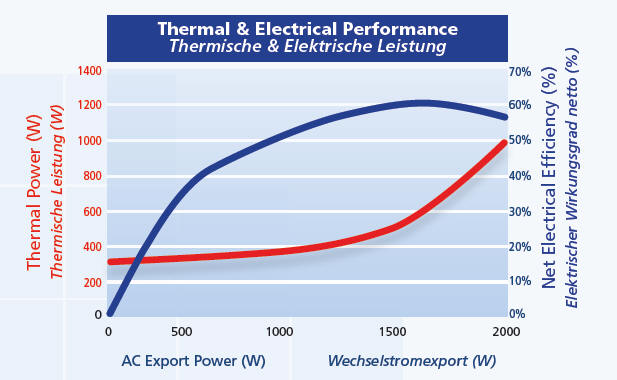
BlueGen™ utilises the latest Gennex™ fuel cell module that offers the highest levels electrical efficiency in the world – 60% net electrical efficiency. This means BlueGen™ produces more electricity from the same amount of fuel compared to traditional small scale electric generators.


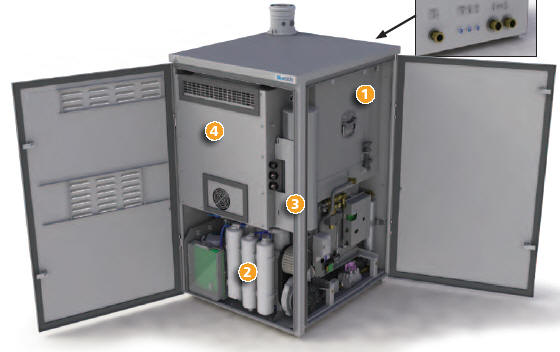
BlueGen™ is fitted with an integrated heat exchanger to recover the heat from the fuel cell module. A separate water tank (not supplied) can be connected to the unit to increase the total system efficiency.

BlueGen™ can be installed as:

SSElectric Generator system; no heat recovery = power only
SSCo-Generation Ssystem; Swith Sheat Srecovery S= power + heat
Because of the high level of electric efficiency, BlueGen™ produces much less heat than other electric generators. Less heat means the unit can operate for longer, which in turn means, more high-efficiency electricity that helps reduce CO2


Functionality

The BlueGen™ unit can operate as a stand-alone generator or be remotely controlled. The output power level can be adjusted to suit a number of different electricity production requirements; from ‘constant base-load power’ generation to pre-set ‘peak shaving’ generation profiles. The BlueGen™ unit has a number of different operating modes:

Heat-up

• Fully automatic using mains power (grid Sindependent Sstart-up Snot Spossible)

Self sustain

• Unit is producing electricity, but with zero power export (e.g. in event of extended grid fault)

Power production

• Unit is exporting electricity; power output can be modulated from 0% to 100%

Cool down

• Using mains power (approx. 36 to 72 hours for safe cool down)

Specifications Spezifikationen
Model Number: BlueGen Modellnummer: BlueGen
Performance Leistung
Electric Output: 0 to 2,000 W
Power output modulation from 0 % to 100 %

Elektrische Leistung: 0 bis 2.000 W
Stromausgangsregulierung von 0 % bis 100 %

Max. Electrical Efficiency: 60 % at 1,500 W output
(Net AC export LHV)

Max. elektr. Wirkungsgrad: 60 % bei 1.500 W Leistung
(Wechselstromexport netto; unterer Heizwert)

Note: Thermal output and water recovery only possible with heat recovery system connected Anmerkung: Thermische Leistung und Wasserrückgewinnung ist nur mit angeschlossenem Wärmerückgewinnungssystem möglich
Thermal Output: Approx. 300 W to 1,000 W
Depending on electric power output and heat recovery water temperature (exhaust gas cooled to 30 °C)

Thermische Leistung: ca. 300 W bis 1.000 W
Abhängig von Stromleistung und Rücklaufttemperatur
(Abgas auf 30° gekühlt)

Total System Efficiency: Up to 85 %
(depending on heat and condensate recovered)

Gesamtsystemwirkungsgrad: Bis zu 85 %
(abhängig von der zurückgewonnenen Wärme und Kondensat)

Inputs Eingaben
Electrical: 230V ±10% 50Hz
Single Phase AC parallel grid connected

Elektrisch: 230V ±10% 50Hz
Einphasenwechselstrom parallel zum Stromnetz geschaltet

Natural Gas: For start-up & operation
Supply pressure 0.9 to 2 kPa

(integrated gas desulphurisation)

Erdgas: Für Inbetriebnahme & Betrieb:
Versorgungsdruck 0.9 bis 2 kPa

(eingebaute Gasentschwefelung)

Water: For internal steam reforming:
Supply pressure min. 100 to 600 kPa
(integrated water treatment system)

Wasser: Für interne Dampfreformierung
Versorgungsdruck min. 100 bis 600 kPa

(eingebaute Wasseraufbereitung)

Consumption (at maximum output) Verbrauch (bei maximaler Leistung)
Natural Gas: 12.6 MJ/hr (12,000 BTU/hr)
Actual gas volume dependant on composition of natural gas

Erdgas: 12.6 MJ/h. (12,000 BTU/h.)
Tatsächliches Gasvolumen abhängig von der Zusammensetzung des Erdgases

Water: 0.0 ℓ/hr - 1.67 ℓ/hr
Water consumption dependant on:

i) if heat recovery connected

ii) amount of condensate recovered from flue gas

Wasser: 0.0 ℓ/h. - 1.67 ℓ/h.
Wasserverbrauch abhängig von:

i) angeschlossene Wärmerückgewinnung

ii) Menge des aus dem Abgas zurückgewonnenen Kondensats

Outputs Ausgaben
Net AC export: 0 W – 2,000 W
Single Phase parallel grid connected: 230V ±10% 50Hz

Wechselstromexport netto: 0 W – 2,000 W
Einphase parallel am Stromnetz angeschlossen: 230V ±10% 50Hz

CO2Emissions: 340 g/kWh
Flue gas emissions consist of CO2and water vapour, virtually no NOx or SOx emissions

CO2Emissionen: 340 g/kWh
Abgasemision besteht aus CO2und Wasserdampf, nahezu keine NOx oder SOx Emissionen

Flue Gas Temperature: Max 200 °C
Maximum if heat recovery system not connected

Abgastemperatur: Max 200 °C
Höchstwert, falls Wärmerückgewinnungssystem nicht angeschlossen ist

Useable Water: Max 1.1 L/hr
From water treatment system if heat recovery system not connected

Verwendbares Wasser: Max 1.1 L/h.
Vom Wasseraufbereitungssystem, falls Wärmerückgewinnungssystem nicht angeschlossen ist

Noise level: < 45 dBa Lärmpegel: < 45 dBa
Operating Conditions & Other Betriebsbedingungen & Sonstiges
Ambient Temperature: +1 °C - +45 °C Umgebungstemperatur: +1 °C - +45 °C
Inlet Air Temperature: -20 °C - +45 °C Luftzufuhrtemperatur: -20 °C - +45 °C
Location: Indoors - excluding living zones
Outdoors - protected from the elements and above freezing temperature

Standort: Im Haus – Wohnbereiche ausgenommen
Im Freien – geschützt vor den Elementen und über dem

Gefrierpunkt

Start-up Time: 25 Hours Anlaufzeit: 25 Stunden
Minor Maintenance Approx 12 months
Air filters (depending on installed location)

Water filters (depending on input water quality)

Intervall Kleinwartung: ca. 12 Monate
Luftfilter (abhängig vom Installationsstandort)

Wasserfilter (abhängig von der eingebrachten Wasserqualität

Major Maintenance Interval: Greater than 12 months
Desulphuriser (subject to gas composition)

Air filters (depending on installed location)

Water filters (depending on input water quality)

Intervall Hauptwartung: Größer als 12 Monate
Entschwefler (abhängig von der Gaszusammensetzung)

Luftfilter (abhängig vom Standort)

Wasserfilter (abhänig von der einbringenden Wasserqualität)

Approx. Mass: < 200 kg Gewicht ca.: < 200 kg
Connections Verbindungen
Fuel: ½" BSP female Brennstoff: ½" BSP-Innengewinde
Water
Supply: ¼" quick connect ‘John Guest’ fitting

Hot water: 2 x ¾" BSP female

Drain: 2 x ¼" quick connect ‘John Guest’ fittings

Wasser
Versorgung: ¼"Anschlussverbindung "John Guest"

Heißwasser: 2 x ¾" BSP-Innengewinde

Abfluss: 2 x ¼" Schnellanschlussverbindung "John Guest"

Electricity: Hardwired via junction box on external casing Elektrizität: Festverdrahtet via Anschluss-kasten an externem Gehäuse
Flue: Balanced flue with standard concentric flue
100/60 mm diameter

Rauchabzug: Abgassystem mit konzentrischem Standard-abgassystem
100/60 mm Durchmesser

Communication: Connection via standard Ethernet port Datenübertragung: Verbindung via Standard Ethernetport
ORIONAIRSALES: Buy Air Source Heat Pumps for home use.

Wednesday, 9 February 2011

Ceramic Fuel Cells (CFCL) extend microgeneration collaboration

02 February 2009 12:12
E.ON and

Ceramic Fuel Cells (Europe) Limited, a subsidiary of Ceramic Fuel Cells Limited (ASX / AIM: CFU), a global leader in fuel cell development, and E.ON, have extended their exclusive agreement to further develop and deploy fuel cell micro combined heat and power (mCHP) units in Great Britain .
Under the terms of the new agreement, E.ON and CFCL will collaborate on a joint development project to commercialise mCHP units designed specifically for the Great Britain market, based on CFCL's GENNEX fuel cell module. The commercialisation project is currently scheduled to run from 2009 to 2012 in a number of stages subject to performance criteria, with the Great Britain market launch expected to follow thereafter.

Subject to CFCL's achievement of agreed price and performance targets, E.ON and CFCL have agreed a potential future order profile, which would secure 'E.ON's exclusive distribution rights for CFCL micro CHP units within Great Britain. A minimum order of 100,000 units over six years from 2012 would be required for E.ON to continue to retain exclusivity.

Charles Bradshaw-Smith, Head of Innovation at E.ON, said:

"The agreement with CFCL reflects two years' hard work to achieve a unit with a technical performance that has met all our targets. We are now pleased to commit funding and resources, subject to the attainment of agreed milestones, to roll out a commercial unit, building on CFCL's market-leading technology. This technology signals that cleaner, more cost-effective energy in the UK home is closer than ever before."

Commenting, Brendan Dow, Managing Director of Ceramic Fuel Cells, said:

"We are delighted that E.ON, one of the leading energy companies in Europe, has chosen to extend their agreement with CFCL. This is a key endorsement and represents significant progress. This provides us with additional funding to develop commercial products, as well as strong support for future market launch and development. This reinforces CFCL as the market leader in solid oxide fuel cells with a clear path to commercialisation. CFCL continues to work with utility partners across Europe to roll out commercial units to all their customers."

CFCL and E.ON expect that the highly efficient new mCHP units would be able to power a wide range of homes and help to reduce carbon emissions in Great Britain.

This agreement follows the successful completion of the first phase of the partners' product development, in which an ‘Alpha' prototype unit, comprising a CFCL NetGenPlus unit integrated with a supplementary boiler, was installed and operated.

The Alpha unit successfully met all of E.ON's performance and lifetime requirements, exporting just under 1kW of power to the local UK grid at high efficiency and generating enough heat for an average UK home's hot water needs. The unit was installed in June 2008 and has been continuously running (on the same fuel cell stack) at the Blackpool facilities of CFCL's appliance partner ever since.

BACKGROUND TO UK MARKET

The UK Government is strongly supportive of microgeneration. Energy industry leaders and Government Ministers have agreed that CHP must play a more prominent role in the United Kingdom's transition to a low-carbon economy. The Energy Act 2008 will introduce a Feed-in-Tariff for small-scale, low-carbon electricity production including conventional gas-fired CHP units with an electrical capacity of 5MW or less.

The UK has the largest boiler market in the EU with 1.6 million gas boilers sold in the UK each year. (Source: BSRIA October 2008)

The UK renewable obligation will be £1 billion by 2010 and by 2016 all new UK homes should be zero or low carbon. There are currently about 100,000 microgeneration installations in the UK, up from 82,000 in 2004. If no additional policies are implemented, about 500,000 microgeneration units would be installed by 2015 and 2-3 million by 2020. But, with the right incentives, up to 9 million microgeneration systems could be installed by 2020, producing as much energy as 5 nuclear power stations (Source: BERR Report June 2008)